Sagittarius & Hips
An ode to Sagittarius’s expansive spirit, where meaning is carried by the body into the open sky.

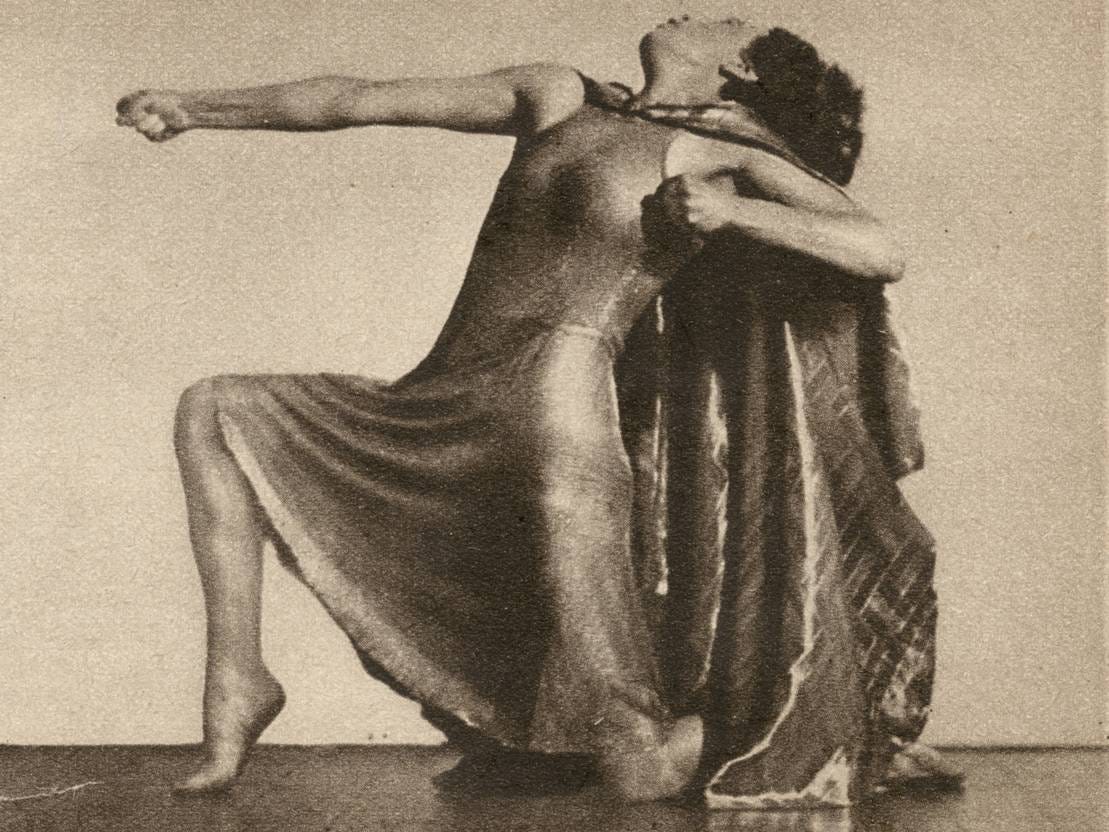
Sagittarius is a natural philosopher—driven by a restless desire to seek truth, make sense of the world, and uncover meaning in the unfolding of events. This pursuit is never fixed or final; it evolves constantly, shifting shape as new questions emerge. This mutable orientation aligns beautifully with the symbol of Sagittarius: the centaur, a creature with a strong, beautiful body that needs to frolic in order to feel good.
With my Moon in Sagittarius, I usually turn to one of my favourite astrological recommendations for this fire sign when the spirit drops: move the hips, shake, wander back into the body. I often return to this advice after sitting at my desk for too long. Dance breaks wake me up, shift my mood, and reconnect me with the world, when thinking has become too heavy, too lodged in the head. Moving the pelvis makes me feel more alive, especially when there’s space for amplitude, for wide, generous motion. The larger the movement, the more pleasure it brings. Freed from limits, movement loosens the grip of consciousness. Control dissolves. The body lets go. And suddenly, a thought takes shape.
Friedrich Nietzsche was the first to suggest that in dance the body itself becomes a work of art capable of expressing not only emotion but thought. Through the mouth of Zarathustra, he urges us to “learn to fly,” to “be light,” and to “dance not only with our feet, but also with our heads.” In other words, to move lightly and freely in our thinking, just as a good dancer moves lightly and freely through space. Nietzsche’s vision of dance as a philosophical act later inspired early 20th-century dancers and choreographers such as Isadora Duncan, Mary Wigman, and others who sought to think through movement.
Among them was the Austro-Hungarian dancer, choreographer, and movement theorist Rudolf von Laban (Sagittarius), who wrote Die Welt des Tänzers (The World of the Dancer) in 1920. He was not only concerned with creating dances; he was obsessed with understanding movement itself, how it unfolds, how it is shaped by space, and how space gives it expressive potential. For him, true dance began when the body was freed from memorised steps and allowed to revel. Those who mastered this, he believed, could experience something close to flight. His understanding of the body was rooted in the belief that movement generates order from within. The dancing body was organic: a living form capable of growing, fragmenting, colliding, and reforming.
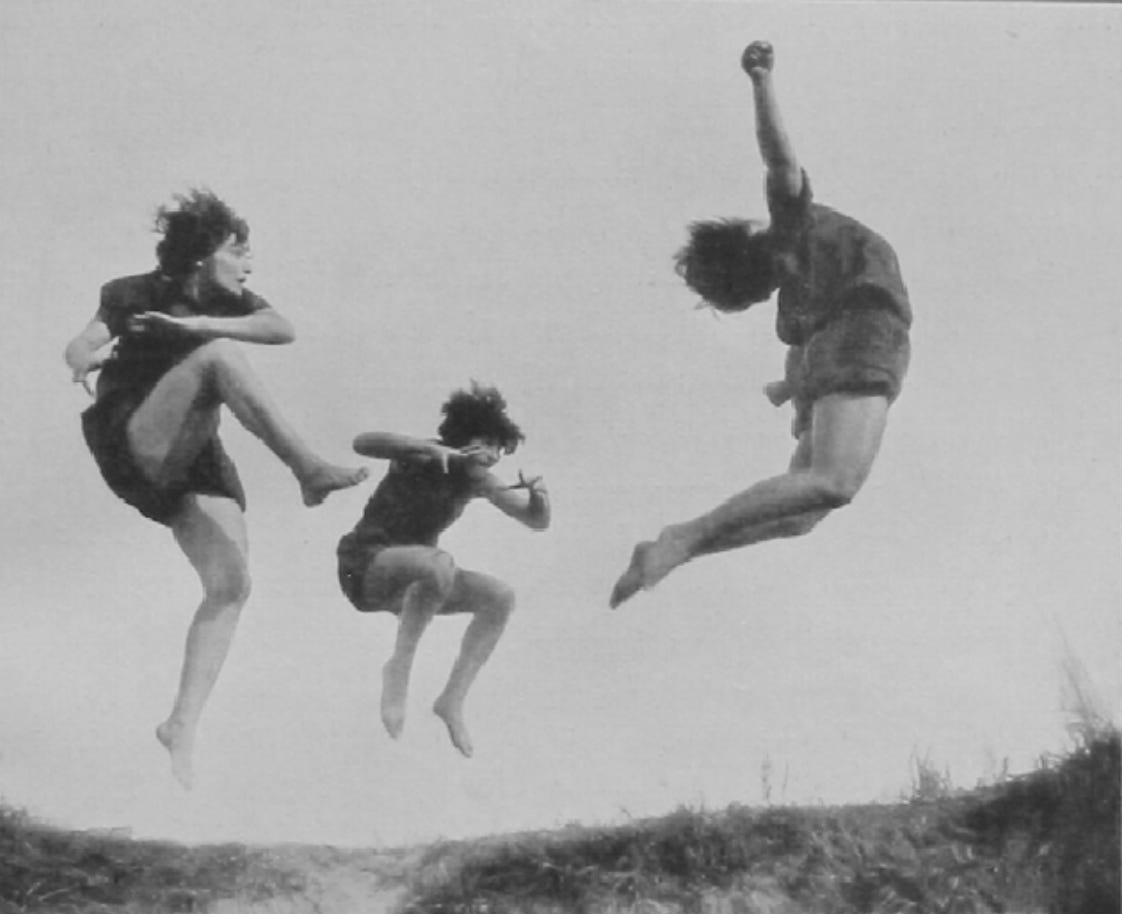
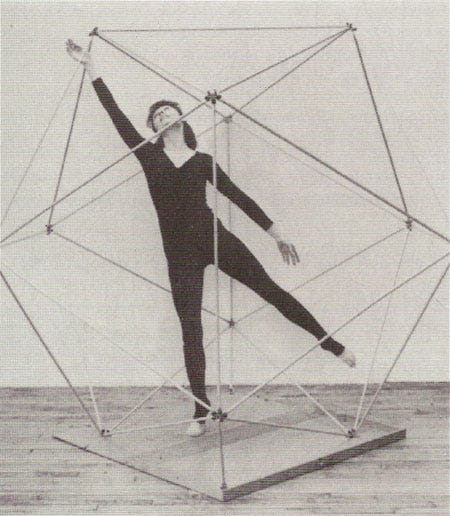
This vision was shaped by Romanticism in philosophy, which imagined life as part of a larger cosmic rhythm. At a moment when such ideas were being re-examined, it offered a spiritual framework that understood motion not merely as human action but as a fundamental force of existence. Laban’s work also developed within the Expressionist milieu, where artists explored the tension between chaos and order, the organic and the abstract. Within this context, the crystal emerged as a recurring image — a form in which life and structure, wildness and geometry, appeared momentarily reconciled. Laban adopted the crystal not only as a metaphor but as a practical tool, central to his methods of visualising, analysing, and training movement in three-dimensional space. Later Laban named his approach choreosophy — from the Greek choros (dance) and sophia (wisdom) — a philosophy that treats movement as a means of understanding life, mind, and humanity’s place within the universe.
On this very cosmic note, I’ll hand over to my friend Paola Murguía (Sagittarius), a wonderful young architect whom I know through mutual friends in London. Originally from Mexico, Paola’s contribution to this edition explores the Mesoamerican ball game Ullamaliztli, a ritual practice that largely disappeared after the Spanish invasion:
I find Constellation of the Body*, which connects the body to a “bigger entity,” deeply important and culturally relevant to me as a Mexican. Mexico holds a painful history, severing vast amounts of knowledge through the violent and complicated birth of the nation. The information we have about those who lived on these lands before us is invaluable to me, and knowing that they possessed such sensitivity in their relationship to cosmology resonates deeply with this newsletter.
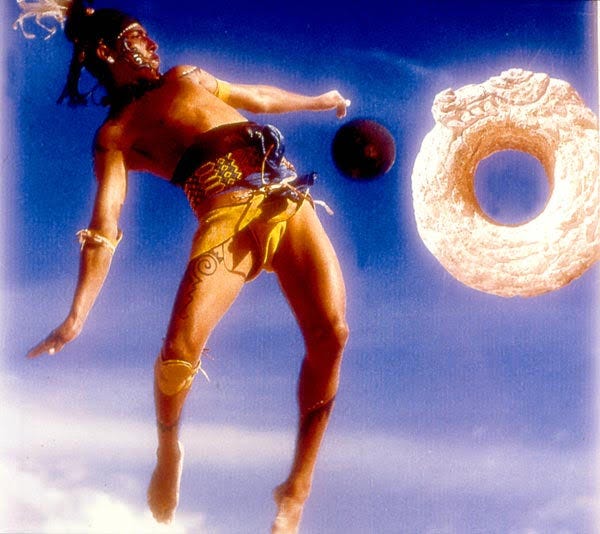
Ullamaliztli literally translates as “ball game” from Nahuatl into English. The Mayans had another name for it in their native tongue, but the rules and essence of the game were largely the same. Players were only allowed to use their hips — and occasionally their elbows or knees — to move a rubber ball around a court. The goal was to score points by “hipping” the ball through a ring at the edge of the court, a rare achievement given its difficulty. The ball was not allowed to touch the floor or certain parts of the players’ bodies, making it an extremely demanding game that could last for hours. Players wore padded garments and layers of fabric around their hips to protect themselves.
The game was more than a sport in Mesoamerican societies; it was a ritual that reflected cosmological beliefs, representing the movement of the sun through the sky. In some instances, players were sacrificed to honour the gods. Because of its religious significance, the game was banned by the Spanish. Today, a modern version survives in northern Mexico under the name Ulama, where the game is still played strictly using the hips.
so many new things that resonate - woww… thank you, S!
🔥🔥🔥